by Noel MPOREBUKE
June 23, 2025. The world holds its breath as the eleventh day of war redraws the balance of power across the Middle East and beyond.
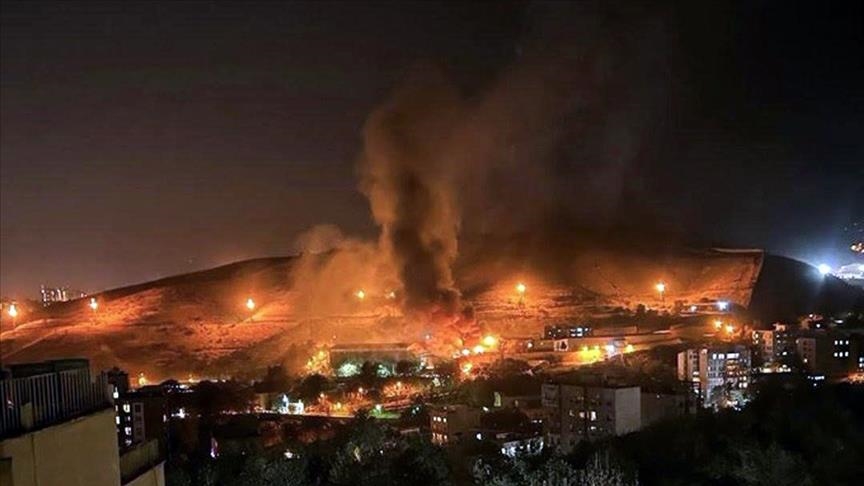
The dawn broke over Tehran under a sky shadowed by smoke and uncertainty. Hours earlier, Israeli fighter jets had sliced through Iranian airspace, unleashing strikes on targets deep in the capital. One of them was Evin Prison, infamous for its political detainees. Surveillance footage released by Iranian state media showed the prison’s massive gate blown open, smoke curling into the sky as rescue crews carried out the wounded. What had once been a symbol of repression was now a symbol of defiance or destruction.
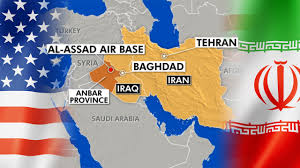
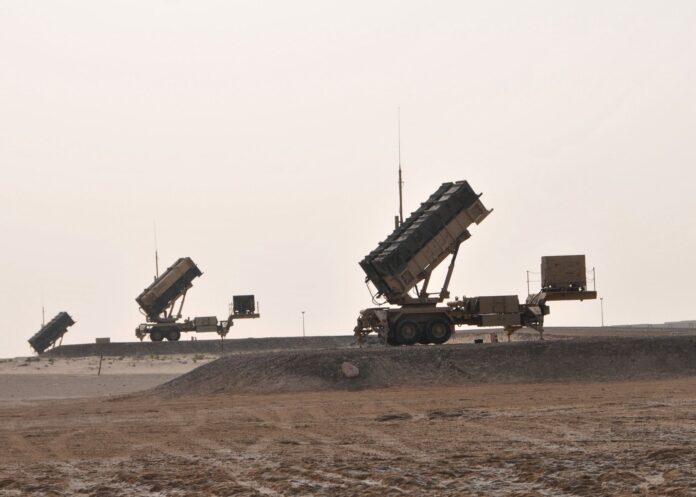
In retaliation, Iran struck deep into Gulf territory, launching ballistic missiles toward the Al Udeid Air Base in Qatar, the largest American military installation in the region. Doha confirmed the attack had been intercepted without casualties. Still, the message was unmistakable: Iran was willing to cross every red line.
Bahrain and Kuwait, both hosting US military facilities, swiftly closed their airspace in coordination, a rare moment of unity in a fragmented region. Hours later, those skies reopened, though nothing felt normal.
Elsewhere in Iran, explosions rocked the outskirts of Ahvaz, the oil-rich capital of Khuzestan. Strikes in north Tehran hit a key electricity feeder station, as the Israeli military claimed it was targeting the IRGC command centers and “government repression bodies” within the city.
In a bold escalation, Israel also targeted the Fordow nuclear enrichment facility, only a day after American “bunker buster” bombs had pounded the same site.
Now, a chilling warning echoed across Tehran: an Israeli-issued evacuation order, urging residents to flee areas near military and weapons production sites. Fear gripped the capital. Long columns of vehicles snaked out of the city.
Meanwhile, sirens screamed across Israel, and Iranian state TV boasted that missiles had reached Haifa and Tel Aviv. Though many were intercepted, impacts were confirmed in Ashdod and Lachish, and civilians braced for more.
Casualties and Disruptions
In Tehran, the power flickered and died. The national grid, already weakened, buckled under the strain of continued strikes. The Tavanir power company admitted to rolling blackouts across the city. In the chaotic aftermath of the Evin Prison strike, Iranian broadcasters showed rescuers combing through collapsed buildings, one stretcher after another carried into the dusk.
Elsewhere, global consequences unfurled. Airlines suspended flights — not just to the Middle East, but across entire transatlantic corridors. Air India canceled its US and European routes, citing a risk that was beyond calculation.
In Qatar, the morning air was tense with dread. The US and UK had warned citizens to shelter in place even before the Iranian missiles flew. That same day, a UK evacuation flight lifted 63 British nationals out of Tel Aviv.
A war that had started as a regional fire was now catching global winds.
Politics and Diplomacy
In Washington, President Donald Trump offered a curious twist: thanking Tehran for what he called an “early notice” of the attack on Al Udeid and mocking it as a “very weak response.” He also thanked Qatar’s emir for peace efforts — even as Doha called the missile strike “a surprise.”
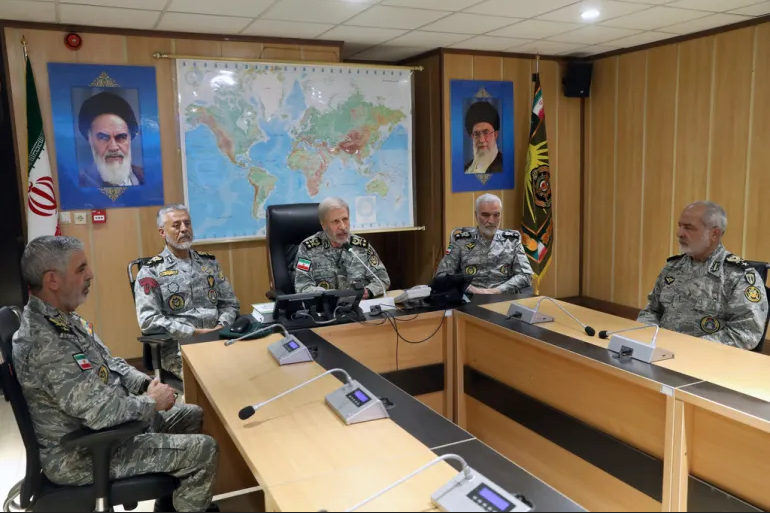
In Tehran, Supreme Leader Ayatollah Khamenei declared, “We will not surrender.” His words, broadcast across the nation and posted on his Farsi-language account, ignited patriotic fervor among some and quiet despair among others.
One of his top advisers, Ali Akbar Velayati, had earlier warned that American bases anywhere in the region were fair game. That threat had turned to action by evening.
Iran’s military chief, General Abdolrahim Mousavi, went further. “This crime and desecration will not go unanswered,” he said of US strikes on Iran’s nuclear infrastructure. And Ebrahim Zolfaqari, a military spokesperson, addressed the US president directly: “Mr. Trump, the gambler, you may start this war, but we will be the ones to end it.”
International reactions unfolded swiftly.
Russia’s Vladimir Putin condemned the attacks on Iran as “unprovoked and unjustified,” vowing continued strategic partnership, though offering no clear military backing. The European Union’s Kaja Kallas warned that Iran threatening the Strait of Hormuz could ignite a global oil crisis. US Secretary of State Marco Rubio urged China to help deter such action.
China’s UN ambassador declared US credibility “damaged,” while France criticized Israel’s strike on Evin Prison as “unacceptable,” citing the presence of French prisoners.
In Germany, Chancellor Friedrich Merz defended the controversial US strikes: “Not without risk,” he admitted, “but leaving it as it was wasn’t an option.”
Trump, true to form, shifted the conversation online: “Drill, baby, drill,” he told the Department of Energy, signaling a push to offset oil instability with domestic production.
Meanwhile, from exile, Reza Pahlavi, son of the former Shah of Iran, declared the moment historic: “This is our Berlin Wall moment,” he told AFP, urging the West not to rescue the regime with diplomacy.
What’s Next
The world is now staring down the barrel of wider war. The Israeli military has warned that strikes will continue. Iran has vowed revenge for every action. The US remains on high alert. The Strait of Hormuz — the vital oil chokepoint — is a pressure valve that, if snapped, could ripple across every corner of the globe.
For the millions displaced, for the diplomats out of time, and for the leaders who now face history’s judgment, Day 11 is no longer just a chapter. It’s a reckoning.
